Table of Contents
ToggleA walkway does more than just get you from point A to point B, it sets the tone for your entire outdoor space. Whether you’re tying your patio to the house, creating a garden path, or defining a seating area, the right walkway choice can transform a bland yard into an inviting retreat. Homeowners often overlook this opportunity, treating pathways as an afterthought rather than a design feature. The good news? You have plenty of options to suit your budget, skill level, and aesthetic. From natural stone to gravel, permeable pavers to composite decking, this guide walks you through seven stunning walkway ideas that’ll have guests asking where you found the inspiration.
Key Takeaways
- Patio walkway ideas range from natural stone and flagstone to pavers, gravel, and composite decking, allowing homeowners to match any budget and aesthetic preference.
- Natural stone and flagstone pathways cost $15–$30 per square foot installed and require a compacted gravel base topped with sand, while permeable pavers ($10–$20 per square foot) help manage stormwater and meet local drainage codes.
- Gravel pathways offer the most budget-friendly option at $3–$8 per square foot but require annual maintenance including raking and topping off, plus a landscape fabric base to prevent weeds.
- Pressure-treated wood walkways last 15–20 years for $15–$25 per square foot with regular sealing, while composite decking costs more ($20–$40) but eliminates staining and lasts 25–30 years with minimal upkeep.
- Path lighting spaced 4–6 feet apart and border plantings at proper spacing transform a functional walkway into an inviting design feature that extends outdoor living space.
- Walkway width should be at least 3 feet for single-file paths or 4–5 feet for two people to walk side-by-side, with a smooth, level surface to prevent trip hazards.
Natural Stone and Flagstone Pathways
Natural stone offers timeless appeal and durability that’s hard to beat. Flagstone, thin, flat sheets of sedimentary rock like slate, sandstone, or limestone, is a popular choice because it splits naturally into usable pieces and requires minimal finishing.
For a rustic or cottage aesthetic, irregular flagstone with natural edges feels organic and forgiving (those slight gaps add character, not mistakes). For a more refined look, cut flagstone with consistent dimensions creates a formal appearance. Most flagstone runs $15–$30 per square foot installed, though prices vary by region and stone type.
Installation is straightforward for a DIYer. Prepare a level base layer of compacted gravel (3–4 inches) topped with sand. Set stones in a running bond or random pattern, checking level frequently with a 2-foot level. Fill joints with polymeric sand, it hardens when dampened and resists weeds better than regular sand. Wear work gloves and safety glasses when handling stone: edges are sharp.
One caveat: natural stone can be slippery when wet. In rainy climates, consider a textured sealant or choose rougher stone varieties like slate over smooth limestone.
Paver and Brick Walkway Designs
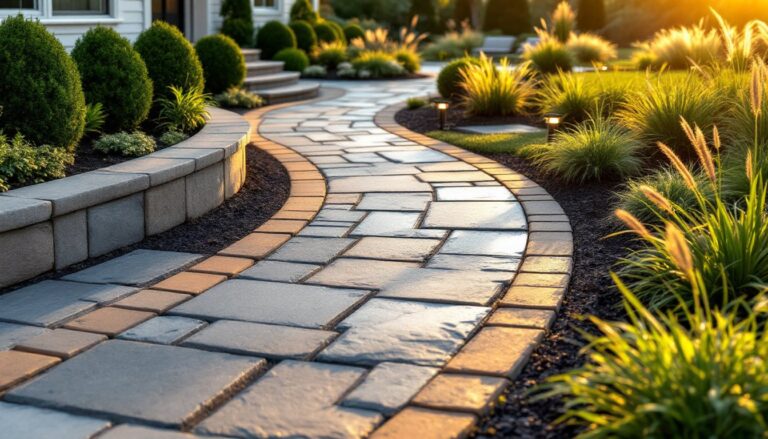
Pavers and bricks are the go-to choice for homeowners wanting clean lines, easy maintenance, and endless design possibilities. They’re modular, you can replace a single broken unit without affecting neighbors, and they work with both traditional and contemporary homes.
Classic Brick Patterns
Running bond (offset rows) and herringbone (angled, interlocking pattern) are the most popular brick layouts. Running bond is simpler to lay and uses less material: herringbone requires more cuts but delivers visual impact. Standard brick dimensions are roughly 3.75″ × 8.75″ (nominal 4″ × 9″), so plan your path width accordingly to minimize cuts.
Brick costs $8–$15 per square foot, depending on quality (standard clay vs. premium handmade). Installation mirrors flagstone: compact gravel base, sand layer, set bricks level, and fill joints with polymeric sand. A mallet and rubber-faced hammer help seat bricks without chipping.
Modern Permeable Pavers
Permeable pavers allow water to drain through the surface, reducing runoff and supporting local drainage codes. This matters if you’re in an area with stormwater regulations, many municipalities now require it for new hardscaping. They’re made of permeable plastic grids filled with gravel, or porous concrete pavers.
Permeable systems cost $10–$20 per square foot installed and handle heavy foot traffic well. They’re especially useful in tight urban yards or where water management is a concern. Installation requires a special geotextile underlayment and specific gravel-fill specifications, so follow the manufacturer’s guidelines closely. Most permeable systems come with detailed installation instructions, don’t skip them.
Gravel and Mulch Pathways
If budget is tight or you want a quick, flexible solution, gravel and mulch pathways are your fastest option. Pea gravel (smooth, rounded stones) and crushed stone (angular, compacts tightly) are the main choices. Pea gravel feels nicer underfoot and looks more refined, but crushed stone holds its form better over time.
Cost is low, $3–$8 per square foot for materials, making gravel ideal for temporary paths or covering large areas quickly. The trade-off? Gravel requires annual maintenance: raking, topping off where material settles, and occasional remulching. Weeds pop through without a proper landscape fabric base layer, so don’t skip it.
Install landscape fabric first, overlapping edges by 6 inches, then anchor it with landscape staples. Spread 2–3 inches of gravel over the fabric, raking level. Edge the path with steel or plastic edging to contain spread. Gravel works great for garden paths and casual, naturalistic walkways. For patios with heavy foot traffic, consider upgrading to permeable pavers or mulch borders to reduce tracking.
Hardscaping design guides can help you compare material performance and durability for different settings.
Wood Decking and Composite Solutions
Wood walkways blend seamlessly with garden settings and are surprisingly durable if maintained properly. Pressure-treated lumber (rated for ground contact) resists rot better than standard framing lumber. Use 2×6 or 2×8 boards for the running surface, setting them on 4×4 posts or concrete footings spaced 16 inches apart. Never lay wood directly on soil or gravel, air circulation underneath prevents rot.
Cost runs $15–$25 per square foot for materials and basic installation. Pressure-treated wood lasts 15–20 years with regular maintenance: annual staining or sealing, pressure-washing every 2–3 years, and replacing cracked or cupped boards as needed. Wear work gloves and a dust mask when cutting: pressure-treated lumber contains preservatives that aren’t pleasant to inhale.
Composite decking, plastic and wood fiber blended together, eliminates the staining and sealing hassle. It resists rot, insects, and UV fading, lasting 25–30 years. Composite costs $20–$40 per square foot, roughly double pressure-treated wood, but you save on maintenance. Both materials can be slippery in rain, so consider anti-slip tape for step transitions.
For smaller accent pathways, composite is worth the premium. For large areas, pressure-treated wood offers better value if you’re willing to maintain it. Southern Living and similar resources showcase regional examples of wood pathways that may inspire your design.
Lighting and Landscaping Enhancements
The best walkway is one people actually use, and that means visibility, safety, and beauty after sunset. Path lights (low-voltage LED bollards) are essential in any climate, placed every 4–6 feet along the walkway. They cost $8–$20 each and run on a 12-volt transformer, making installation safe and DIY-friendly. Bury the wire in a shallow trench or tuck it along the path edge.
Border plantings frame the walkway and define its edges. Low-growing shrubs (18–24 inches tall) like boxwood or dwarf spirea keep sightlines clear. Ornamental grasses and perennials add movement and color. Space plants 18–36 inches apart depending on mature size, and mulch around them with 2–3 inches of shredded bark to retain moisture and suppress weeds.
Walkway width matters: 3 feet minimum for single-file paths, 4–5 feet for two people to walk side-by-side comfortably. Ensure a smooth, level surface, trip hazards are the enemy. If your path settles unevenly over time, reset stones or resurface with fresh gravel to maintain safety.
Better Homes & Gardens offers seasonal landscaping ideas and plant guides for pairing with hardscaping projects. Accent lighting, edging plants, and proper width transform a functional path into a design feature that extends your living space outdoors.