Table of Contents
ToggleA patio fireplace isn’t just a heat source, it’s the gathering point that turns a backyard into a destination. Whether you’re extending your outdoor season into fall and spring, or simply want a focal point for evening entertaining, a patio fireplace adds warmth, ambiance, and value to your home. The good news is you don’t need a massive budget or professional installation skills to make it happen. From sleek modern designs to rustic stone options, we’re breaking down seven practical patio fireplace ideas that range from full builds to budget-friendly DIY projects.
Key Takeaways
- Patio fireplace ideas range from modern built-in designs to budget-friendly DIY projects, with options starting under $150 for cinder block fire pits.
- Modern built-in fireplaces require proper framing, local code compliance, and clearances of 2 inches around metal chimneys and 8–12 inches from combustible materials.
- Fire pit tables combine seating and heat in a compact footprint and cost $400–$1,500, offering portability without the complexity of venting or structural work.
- Rustic stone and masonry fireplaces require professional guidance for footing installation below the frost line, though hiring a mason for structural work and finishing the facing yourself can reduce costs.
- Small patios can use tabletop fire bowls ($50–$300), corner chimineas ($200–$600), or compact gas stoves (20,000–40,000 BTU) to maintain fireplace ambiance without excess space.
- Choose between wood, propane, natural gas, or gel fuel based on your climate, regulations, and convenience needs—propane costs $0.80–$1.50 per hour to operate, while gel fuel is pricier but smokeless and vent-free.
Modern Built-In Fireplace Designs
Modern built-in fireplaces create a clean, architectural look that anchors contemporary patios. These units are typically set flush into a wall or raised platform and finished with metal surrounds, concrete, or stacked wood siding. They’re professional-looking but entirely achievable for a handy homeowner.
Start by framing a fireplace chase, a vertical enclosure that houses the flue and firebox. You’ll need to account for clearances: most building codes require 2 inches of air space around a metal chimney and 8-12 inches from combustible materials like wood siding. Check your local International Residential Code (IRC) requirements: some jurisdictions require permits for outdoor fireplaces.
For the firebox itself, you can purchase a prefabricated steel or cast-concrete insert. Metal insert boxes are popular because they’re affordable (roughly $300–$800) and simple to install, they slot directly into your framed opening. Once your firebox and chimney are in place, you’ll face the exterior with tile, stone veneer, stucco, or powder-coated steel. The facing is where your design shines. Thin-set mortar bonds stone veneer or tile to a backer board (cement board works great), and neutral colors like charcoal, cream, or gray pair well with wood or concrete seating areas.
Fire Pit Table Combinations
Fire pit tables combine seating and warmth in one compact footprint, making them ideal for patios where space or budget is tight. These are pre-made metal vessels with a propane or natural gas burner inside, surrounded by a concrete, stone, or wood-slab tabletop.
The appeal is straightforward: no digging, no framing, no complicated venting. Many models are portable enough to move if your layout changes. Propane versions run off a standard 20-pound tank hidden underneath or nearby: natural gas models require a hardline connection. On the material front, fiber cement and cast concrete tops are durable and weather-resistant, while wood slabs offer warmth but need annual sealing and more frequent maintenance.
When shopping, verify that your chosen table meets CSA (Canadian Standards Association) or UL (Underwriters Laboratories) safety certification. Burner output ranges from 30,000 to 60,000 BTU: a 50,000 BTU table will heat a moderate seating area on a cool evening. Position your table at least 10 feet from the house and overhanging branches, as flames and heat rise quickly. Insurance and HOA rules sometimes restrict fire features, so confirm before purchasing. Expect to spend $400–$1,500 for a quality, certified fire pit table.
Rustic Stone and Masonry Options
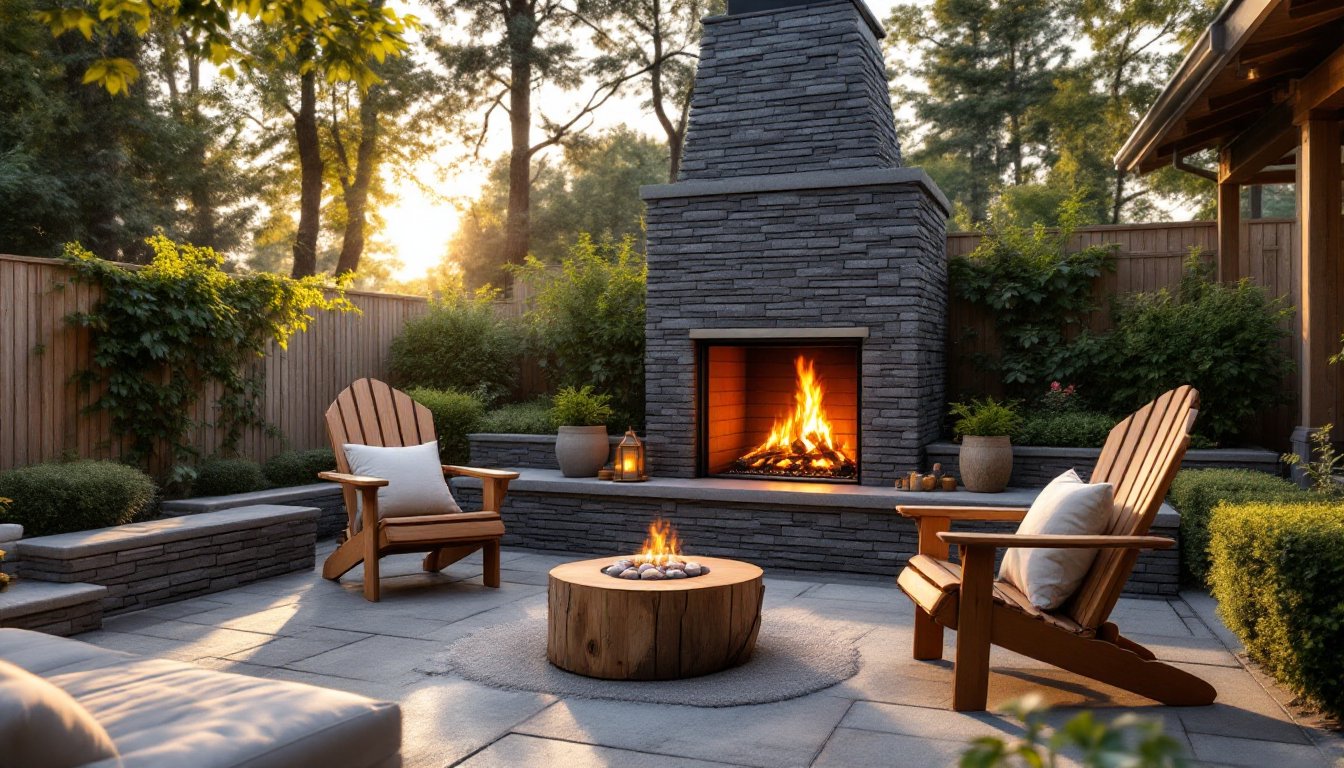
Rustic stone and masonry fireplaces evoke permanence and craftsmanship. Stacked fieldstone, mortared brick, or cast-stone chimney blocks create a focal point that feels like it belongs in the landscape. These projects are labor-intensive and usually benefit from professional guidance, especially if you’re not experienced with masonry.
A traditional brick or stone chimney sits on a concrete footing that extends below the frost line in your region, critical to prevent settling and cracks. The footing depth varies: check local codes, but it’s typically 3–4 feet in cold climates. You’ll also need a concrete hearth slab (at least 16 inches beyond the firebox opening), reinforced with rebar.
For the firebox itself, many DIYers use a prefabricated clay chimney liner kit or a metal firebox insert to save time and ensure code compliance. Then you face the structure with stone or brick using type-N mortar. Dry-stack stone (no mortar) is tempting but weaker and collects water: mortared joints are standard and more forgiving.
If this sounds daunting, consider hiring a mason for the structural work, footing, firebox installation, and first few courses of stone, then finishing the facing yourself or bringing in the pro for final detailing. This splits cost and labor, and you’ll learn something valuable. According to landscaping ideas featuring fire pits and outdoor fireplaces, thoughtfully sited masonry fireplaces anchor outdoor living spaces.
Compact Solutions for Small Patios
Small patios don’t have to skip the fireplace charm. Compact options deliver the ambiance and warmth without dominating a modest space.
Tabletop fire bowls and gel fuel fireplaces are the lightest touch. These sit on any stable surface, a side table, low wall, or custom stand, and run on canned gel or ethanol fuel. No venting, no installation. They produce real flame and gentle heat (though less than a full-size unit) and cost between $50 and $300. The downside: fuel is pricier per use than propane, and they’re best for supplemental warmth on cool evenings.
Corner chimineas are traditional Mexican outdoor ovens that fit snugly against a corner. A 4–5 foot chiminea has a small footprint and a distinctive conical shape. Keep them 10 feet from structures and vegetation. Expect $200–$600 for a quality cast-iron or clay version.
Outdoor gas fireplaces (free-standing stoves) are compact, efficient, and vent-free or low-vent, making installation simpler. A compact gas stove occupies about 2 feet of space but heats effectively. Look for models in the 20,000–40,000 BTU range for a small patio.
With limited space, your fireplace is a conversation piece, not the background. Choose finishes and materials that complement your existing furniture and hardscape.
Budget-Friendly DIY Fireplace Projects
Not every fireplace requires five figures. Several manageable DIY builds deliver real fire and ambiance on a modest budget.
The cinder block fire pit is the classic entry point. Arrange concrete cinder blocks in a circle (36–48 inches diameter is ideal), stack them 2–3 blocks high, and backfill the interior with sand or gravel. Place a steel fire ring (a metal collar that sits in the blocks) or make one from galvanized metal ducting. Add a grill grate on top and you’ve got a fire pit for under $150. Per Southern Living’s outdoor ideas, this straightforward approach works beautifully in casual backyards.
The steel barrel fireplace is another budget gem. A 55-gallon steel drum, cut and vented properly, becomes a rustic fireplace surround. You’ll need an angle grinder to cut the drum, a metal grate inside, and good ventilation. Total cost: roughly $100–$200. Safety note: wear a dust mask and goggles when cutting, and let the drum cool completely before handling.
The mortared stone or brick surround (around an inexpensive metal insert) is labor-intensive but manageable for one person over a few weekends. Gather flat stones from your landscape or a local quarry. Use a simple concrete pad as the base, dry-lay your stones first to plan the layout, then mortar them in place.
All of these require zero permitting in most areas, they’re considered temporary. That said, check your local rules and HOA covenants before starting.
Materials needed:
- Cinder blocks or reclaimed bricks
- Type-N mortar (if mortaring)
- Fire-rated sand or gravel
- Steel grate or grill top
- Safety gear: work gloves, dust mask, eye protection
Prep work is everything here. A level base prevents uneven settling. Seasoned firewood (moisture content below 20%) burns cleaner and safer than green wood.
Choosing Materials and Fuel Types
The right material and fuel pairing depends on your climate, use frequency, and local regulations.
Wood-burning fireplaces are the traditional choice. Real wood fires are beautiful, but they require an open flue, produce ash, and are less efficient than gas. Wood smoke can irritate neighbors, and in some areas air quality regulations limit wood-burning days. You’ll also need seasoned hardwood (oak, maple, or hickory) stored dry.
Propane and natural gas are cleaner and more convenient. Propane is portable: natural gas requires a hardline but offers consistent supply. Both ignite instantly and run on a thermostat or remote control. Expect to pay $0.80–$1.50 per hour to operate a 50,000 BTU unit. Downsides: less of the primal appeal of real wood, and you’ll need to conceal or bury gas lines neatly.
Gel and ethanol fuels are virtually smokeless and need no venting, making them perfect for apartments or enclosed patios. The flame is real but cooler. Fuel is more expensive per use than propane, around $3–$5 per can.
Choosing stone and finishes:
- Natural stone (fieldstone, slate, granite) is stunning but pricey ($8–$15 per square foot installed) and variable in color.
- Manufactured stone veneer mimics real stone at half the cost and with consistent color, making it easier to plan your design.
- Brick is durable, classic, and forgiving if you’re laying it yourself.
- Stucco or concrete offers a clean, modern look and is budget-friendly.
Climate matters, too. Freeze-thaw cycles in cold regions can damage porous stone, so seal it annually. In arid climates, open joints allow wind through. Consult Country Living’s regional building guidance for climate-specific best practices.
Conclusion
A patio fireplace transforms how you use your outdoor space, extending the season and creating a reason to gather. Whether you’re committing to a permanent masonry build, installing a gas insert with a modern surround, or stacking cinder blocks for a weekend project, your choice should match your skills, budget, and lifestyle. Start with a clear picture of your patio layout, measure twice, check local codes, and don’t skip the prep work. Your future self will thank you when that fireplace is running smoothly for years to come.