Table of Contents
ToggleA pergola is only as useful as the shade and weather protection it provides. Whether you’re tired of squinting through afternoon sun or want your patio to stay dry during light rain, the right pergola roof cover transforms an open structure into a genuine outdoor living space. In 2026, homeowners have more flexible and durable options than ever, from motorized retractable systems to living plants to weather-resistant fabrics. This guide walks through seven proven solutions, helping you weigh installation complexity, cost, maintenance, and how each one performs year-round.
Key Takeaways
- Pergola roof cover options range from budget-friendly ($300–$800 manual shade cloth) to premium solutions ($8,000+ with structural upgrades), offering flexibility between rain protection, sun control, and maintenance demands.
- Retractable shade cloth and motorized systems provide adjustable UV protection (blocking 80–90% of rays) but offer zero rain protection, while polycarbonate panels and metal roofing deliver true weatherproofing for permanent covered patio use.
- Living vines are the lowest-cost solution requiring only plant purchases, but demand consistent pruning and remain seasonal in deciduous varieties, leaving bare branches in fall and winter.
- Polycarbonate panels and metal/wood roofing require structural support (beams at least 2×8, posts 6×6) and proper slope (2–5% pitch minimum) to prevent water pooling and ensure durability lasting 7–15 years.
- Climate conditions significantly influence pergola roof cover performance—metal and plastic shed moisture faster in humid regions, while sloped metal or wood roofing prevents snow and ice accumulation in cold climates.
- Shade sails deliver modern aesthetics with 80–95% UV protection and permanent durability (10–15 years), but require heavy-duty anchor points and cannot be adjusted seasonally without reinstallation.
Retractable Shade Cloth and Canopy Systems
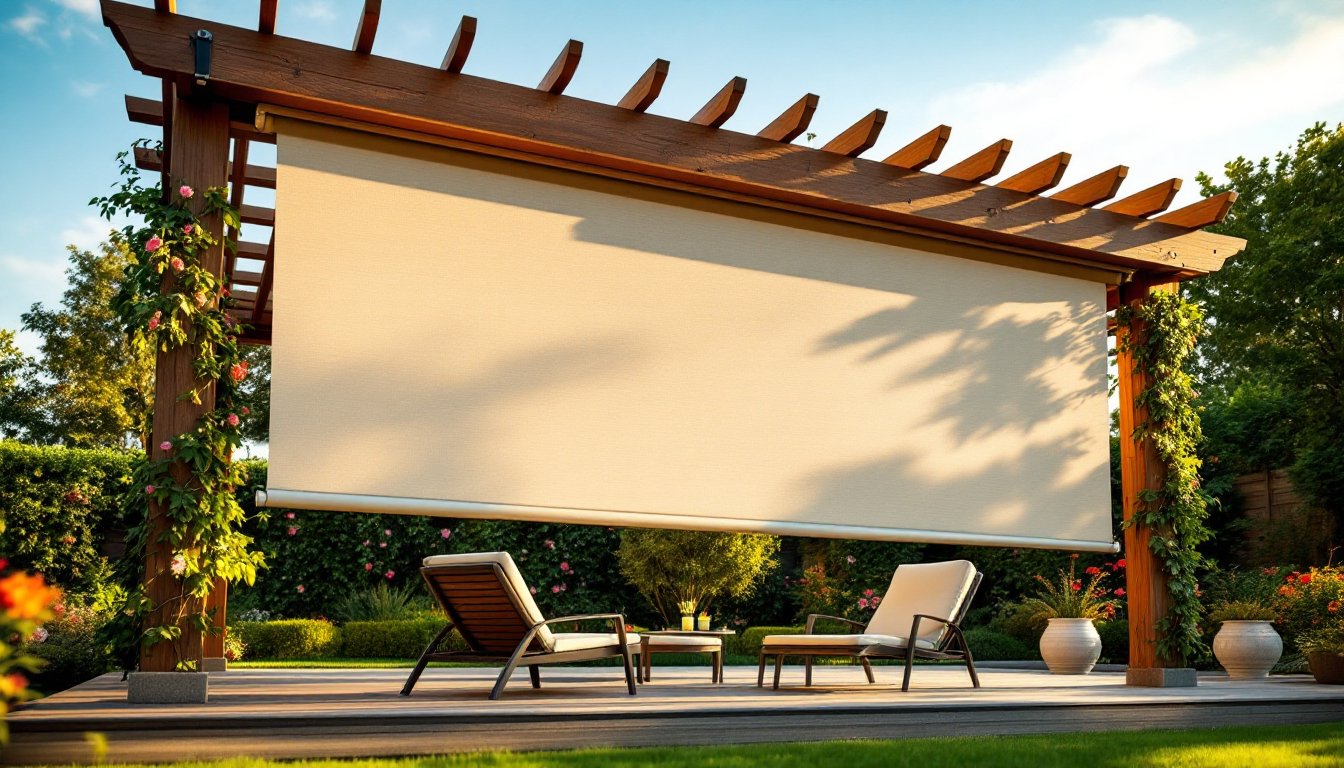
Retractable systems give you the best of both worlds: full sun when you want it, complete shade when you don’t. These motorized or manual roller setups mount to the pergola frame and roll out fabric (usually acrylic or polyester blends) across the top. Manual systems cost less upfront, typically $300–$800 for a 10×12 footprint, but require hand cranking. Motorized versions ($1,200–$3,500) add convenience and often include remote controls or smart integration.
The real advantage is flexibility. On a cool morning, you roll it up. When the afternoon heat hits, you deploy it in seconds. Most quality shade cloths block 80–90% of UV rays while still allowing air circulation, which keeps your space from becoming a sauna. Brands use reinforced polyester or solution-dyed acrylic that resists fading and mildew better than basic cotton canvas.
Installation requires solid mounting points on your pergola’s header beams and side rails. If your pergola is attached to your house, you’ll likely need additional brackets bolted into framing. Pre-cut kits make this easier, though you may still want an extra set of hands for alignment. Check that your pergola frame can handle the lateral load, motorized systems add 30–50 pounds of mechanism weight plus the cloth itself.
One downside: these systems provide zero rain protection. Heavy downpours go right through the weave. In winter, extended wet weather can promote mildew if you don’t roll them up and let them dry regularly.
Polycarbonate Panels and Translucent Covers
Polycarbonate (PC) is tough, lightweight, and lets light through while filtering UV. Twin-wall or triple-wall sheets offer insulation value and are way more impact-resistant than glass. They’re the same material used in greenhouse panels, so they’ve proven durability in outdoor conditions.
These panels come in clear, frosted, and tinted versions. Clear panels give you the brightest space: frosted reduces glare and heat gain: tinted options range from light bronze to gray. Panels typically measure 4 feet wide by 6, 8, or 10 feet long, with thicknesses from 6mm (single wall) to 16mm (triple wall). Thicker panels cost more but provide better insulation and sound dampening.
You’ll need a sturdy frame to support the panels. If your pergola has 2×6 or heavier beams on 24-inch centers, that works. Lighter structures need reinforcement. Installation involves fastening panels with polycarbonate-specific hardware (H-channel or Z-channel connectors and closure strips to seal edges). Improper installation leads to water pooling and UV-exposed edges that yellow over time. Budget $15–$25 per square foot installed, so a 200-square-foot pergola runs $3,000–$5,000 all-in.
Polycarbonate is durable and resists hail better than tempered glass, but it does require maintenance. Clean panels twice a year with mild soap and water. Avoid abrasive scrubbers that scratch the surface. After 7–10 years in intense sun, clarity may gradually reduce. Most quality sheets come with a 10-year UV guarantee.
Natural Climbing Plants and Living Vines
Growing vines over your pergola is the most organic solution and costs almost nothing upfront, just the cost of young plants. Climbing roses, clematis, grapevines, or fast-growing varieties like trumpet vine can cover a pergola in two to three seasons. The shade builds gradually, which means the first summer you’re still getting dappled light, but by year three you’ve got dense canopy coverage.
The main advantage is beauty and passive cooling. Leaves absorb heat and create humid microclimates, dropping nearby temperatures by 5–8°F on a hot day. You also gain privacy and attract pollinators. The downside: it’s seasonal. In fall and winter, deciduous vines drop leaves, leaving you with bare branches. Evergreen options like ivy or clematis armandii stay full year-round, but they’re more finicky in cold climates and can become invasive if not managed.
Vines need solid support. Your pergola slats should be close enough, no wider than 2 feet apart, or stems will slip through. Lighter vines (clematis, honeysuckle) climb easily with minimal tying. Heavy producers like grapevines or older trumpet vines may need additional cross-bracing or cables to prevent overloading beams.
Maintenance is real work. Pruning twice a year keeps growth in bounds. Dead stems accumulate, and you’ll have to manage them to prevent pests. Vines also clog gutters and can work their way into siding or soffit if your pergola is attached to your house. This solution is best for freestanding structures in yards where you enjoy the naturalistic look and have time for seasonal upkeep.
Metal and Wood Slat Roofing Options
Solid roofing, whether metal or wood, transforms a pergola into an actual covered patio that sheds rain and provides real shade. This is structural work and the most expensive option, but the result is a true outdoor room.
Wood slats (typically 2×6 or 2×8 boards laid flat across the pergola frame) are classic and blend with most architectural styles. Spacing depends on your goal: tight spacing (6 inches apart) blocks 80%+ of sun: wider spacing (12–18 inches) gives dappled light. Wood requires finishing, stain or paint every 2–3 years, or leave it to weather naturally if you prefer silvery, weathered look. Rot risk is real, especially at joints and where fasteners collect water. Use pressure-treated lumber rated for ground contact (UC-4B or higher) for extra durability, or specify cedar or redwood for natural rot resistance.
Metal roofing, standing seam, corrugated, or ribbed panels, is lower-maintenance and sheds rain effectively. Aluminum resists rust better than steel but costs more. A corrugated metal roof has visible ribs running lengthwise, shedding water quickly. Standing seam is more refined, with seams that run perpendicular to water flow. Metal is loud in rain (unless you add sound-absorbing underlayment), and it heats up in direct sun, sometimes reflecting intense heat into your sitting area.
Either choice requires proper structural support. Sloped roofing (even a slight 2–5% pitch) is essential for drainage. This may mean rebuilding the pergola or adding support posts, which can run $2,000–$5,000 in labor alone. Snow load and wind load calculations are necessary in harsh climates, hire a structural engineer if your pergola spans more than 12 feet. Metal roofing runs $10–$20 per square foot: wood slats are $5–$12. Both typically need professional installation.
Waterproof Fabric and Shade Sails
Shade sails are modern, geometric, and deliver strong UV protection while allowing rain to run off. These high-tech fabrics (usually 90%+ polyester solution-dyed acrylic) are stretched taut between anchor points on your pergola, creating a clean, contemporary look. Unlike retractable cloth, shade sails are permanent fixtures, once up, they stay year-round.
Installation requires solid anchor points, typically heavy-duty stainless-steel eye bolts or corner mounts bolted into the pergola structure or posts. Sails are highly tensioned (like a drum skin), which puts real lateral stress on your frame. If your pergola posts aren’t at least 6×6 treated wood or steel, you may need bracing. Tension cables are usually stainless steel or galvanized, essential for rust resistance and longevity.
Sails come in single-layer (basic) or dual-layer (improved durability and insulation) construction. Colors range from neutral tans to bold blues. They block 80–95% of UV depending on weave density. Water runs off fairly quickly, though standing water can pool in sagging low points. Because they’re permanently installed, you’ll need to manually remove them in heavy snow country or install them so snow slides off easily.
Cost varies widely: a simple 13×13-foot triangle sail runs $400–$800, while a multi-panel sail system covering a large patio can hit $2,000–$4,000. Professional installation adds 50–100% labor. The advantage is durability, quality fabrics last 10–15 years. The trade-off is lack of flexibility: you can’t adjust coverage seasonally without reinstalling.
Corrugated and Metal Sheet Covers
Corrugated panels are cost-effective and widely available at building supply stores. Unlike heavy standing-seam roofing, corrugated sheets are lighter and easier for a handy DIYer to install. They come in fiberglass-reinforced polyester (FRP), polycarbonate, or galvanized steel, with profiles that look like traditional ribbed metal roofing but at a fraction of the price.
FRP panels are budget-friendly ($2–$5 per square foot) and provide adequate UV filtering, though they yellow over time and can become brittle in intense sun. Polycarbonate corrugated ($4–$8 per square foot) is lighter, more impact-resistant, and lasts longer. Steel corrugated is the cheapest ($1.50–$3 per square foot) but rusts if scratches aren’t sealed and requires regular maintenance.
Installation involves fastening sheets to your pergola’s main beams using corru-gate-specific fasteners (usually stainless-steel rivets or bolts with rubber washers to prevent leaks). The ribs run perpendicular to water flow, so roof pitch should be at least 2:12 (2 inches of rise per 12 inches of run) for proper drainage. You can install these yourself with a cordless drill, riveter, or socket wrench, no special welding equipment needed.
Common mistakes: fastening too close to panel edges (they crack), using regular hardware instead of rubber-gasketed fasteners (water leaks), and not overlapping sheets enough (water seeps under). Follow the manufacturer’s specs on fastener spacing (typically every corrugation at peak points, spaced 12–16 inches apart). Given regional building codes vary, confirm your installation meets local requirements, some jurisdictions require permits for any roof-like structure.
Choosing the Right Cover for Your Pergola
Your choice hinges on three questions: Do you need rain protection? How much sun control do you want? And what’s your maintenance tolerance?
If rain protection is non-negotiable, think covered patio dining, go with corrugated sheets, metal roofing, wood slats, or polycarbonate panels. If you want flexible, adjustable coverage for hot days and open sky on cool mornings, retractable cloth or shade sails fit. If you’re willing to trade seasonal coverage for natural beauty and low upfront cost, living vines are unbeatable.
Climate matters. In humid, cloudy regions, fabric and canvas accumulate mildew: metal or plastic sheds moisture faster. In cold snow country, angled metal or slat roofing with proper slope is essential, while low-slope polycarbonate can trap snow and ice. In intense desert sun, shade cloth (80–90% UV block) outperforms high-transparency polycarbonate.
Structural readiness is critical. Lightweight options (cloth, sails, vines) work on most pergolas. Heavy options (metal/wood roofing, thick polycarbonate) need beams at least 2×8 and posts at least 6×6, with 24-inch spacing. If your pergola’s current frame is marginal, reinforcement costs add quickly, often more than the roofing itself.
Budget matters too. Vines and manual shade cloth cost under $500. Retractable motorized systems and polycarbonate panels run $2,000–$5,000. Full roofing with structural upgrades can exceed $8,000. Resources like Fix This Build That and Gardenista offer inspiration and material comparisons for outdoor structures. Get quotes from at least two installers if you’re hiring labor: prices vary by region and material availability. Start with what matters most, protection, aesthetics, or budget, and work backward from there.