Table of Contents
ToggleWhen the sun beats down on your patio, even the nicest outdoor furniture and décor lose their appeal fast. A homeowner sitting in the shade of a well-designed patio covering isn’t just more comfortable, they’re also protecting their skin, extending the life of their outdoor upholstery, and actually using their backyard year-round. Whether you’re hosting summer gatherings or simply retreating outdoors on a hot afternoon, the right patio shade solution makes all the difference. This guide walks through seven practical patio shades ideas, from permanent structures to flexible options, so you can choose what fits your space, budget, and lifestyle.
Key Takeaways
- Patio shades ideas range from permanent structures like pergolas and awnings to flexible options like umbrellas and shade cloth, letting homeowners choose based on budget, climate, and lifestyle preferences.
- Pergolas offer customizable, attractive partial shade with optional climbing vines for deepened coverage over time, with costs ranging from $500 for DIY kits to $8,000+ for custom-built structures.
- Retractable awnings and shade sails provide flexible sun control, with motorized awnings blocking 75–85% of direct sunlight and sails offering modern aesthetics at $200–$2,000+ depending on coverage.
- Mature shade trees and fast-growing vines deliver long-lasting, maintenance-free coverage while naturally lowering ground temperatures by 10–15 degrees Fahrenheit compared to full sun.
- Portable solutions like patio umbrellas and pop-up canopies require zero permits and minimal installation, making them ideal for testing shade options before committing to permanent structures.
- Layering multiple patio shade solutions—combining pergolas, trees, awnings, and retractable cloth—creates maximum comfort and flexibility while accommodating seasonal sun angles and changing weather conditions.
Pergolas and Covered Structures
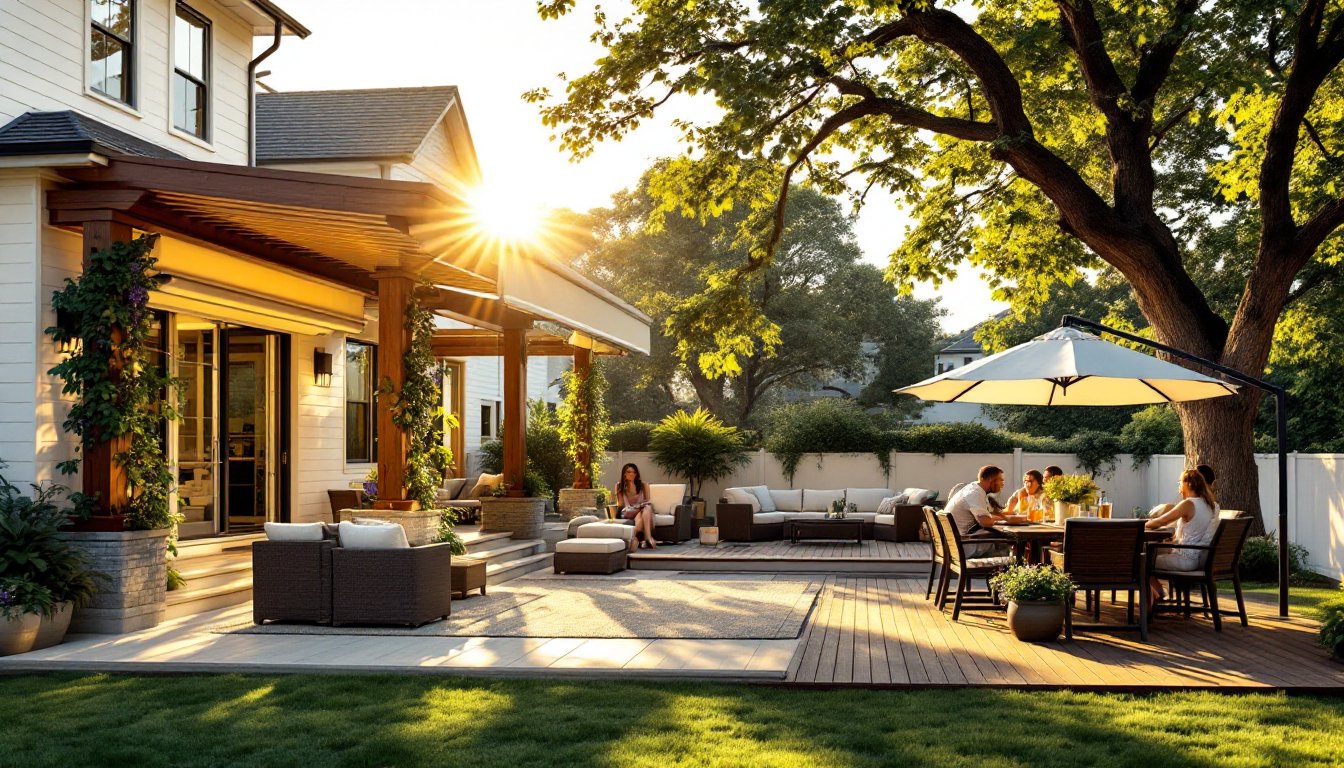
A pergola is one of the most popular patio shade solutions because it’s customizable, attractive, and offers partial shade that still lets air flow through. The open-roof design with evenly spaced beams filters sunlight while maintaining visibility and a sense of openness, unlike a solid roof, which can feel enclosed.
Perennial vines like clematis, grape, or jasmine grow across the slats and deepen the shade over time. If you want immediate results without waiting for plants to mature, consider shade cloth layered across the top. Materials range from pressure-treated lumber to composite decking (which resists rot and requires minimal maintenance) to aluminum (lightweight and durable in coastal regions).
A freestanding pergola attached to your patio typically spans 8 feet by 12 feet to 12 feet by 16 feet, though custom sizes are common. Posts are usually 4×4 lumber set in concrete footings at least 30 inches deep to prevent frost heave and tipping in high winds. Beams and joists depend on local snow load and wind codes, consult your building department before you build, especially if you’re in a region prone to heavy snow or strong storms.
For attached pergolas (bolted to your house), you’ll anchor to the rim joist or ledger board, this requires hardscaping solutions like pergolas designed with proper structural support. A bolted connection is stronger than posts alone, but it also means penetrating your home’s exterior, so flashing and caulking are critical to prevent water leaks.
Budget ranges widely. A simple DIY kit pergola runs $500–$1,500, while custom-built wood or composite structures can reach $3,000–$8,000+ depending on size and materials.
Retractable Awnings and Shade Sails
Retractable awnings give you flexibility: full sun when you want it, shade when you don’t. A motorized model extends and retracts at the touch of a button, while manual versions use a hand crank. Canvas or solution-dyed acrylic fabric resists UV fading better than untreated cotton.
When extended, a typical 12-foot awning projects 8–10 feet from your house and blocks roughly 75–85% of direct sunlight. Installation requires attaching a sturdy aluminum or steel bracket to your fascia or wall, this means finding solid backing, usually framing or rim joist, not just drywall. If your house has fiber-cement siding or stucco, you’ll need lag bolts or expansion bolts rated for those materials.
Shade sails are another option: large, triangular pieces of knitted polyester or HDPE fabric anchored at corners and edges. They’re modern-looking, require no overhead framing, and work well for patios, decks, or landscaped seating areas. A single 12-by-12-foot sail costs $200–$600, while an awning of the same coverage runs $800–$2,000+. Sails are easier to DIY-install if you already have sturdy anchor points like trees or posts, but permanent installation, say, bolting corner brackets into hardscape or new posts, is more involved.
Both awnings and sails need occasional cleaning and inspection. Fabric can tear if exposed to sustained wind or hail, so consider taking down a sail before severe weather or retracting an awning during a storm.
Natural Shade From Trees and Greenery
Large, mature trees provide the most reliable and longest-lasting shade. A healthy, spreading oak or maple casts a dense canopy that can lower ground temperatures by 10–15 degrees Fahrenheit compared to full sun. The bonus: no installation costs or maintenance of structures.
If you’re planting new shade trees, choose species suited to your climate zone and soil type. Deciduous trees (like oaks and maples) drop their leaves in autumn, letting winter sun warm your home. Evergreens provide year-round screening but may block winter sun that could help heat your space.
Fast-growing options include river birch, tulip poplar, and certain hybrid willows, which can reach 30 feet in 15–20 years. Slower growers like oaks take 30–50 years to mature but live much longer. Space trees at least 15–20 feet from your patio to avoid excessive leaf and branch debris directly overhead, and consider their mature canopy width when siting them.
If you lack mature trees, climbing vines on a trellis or fence shade a patio much faster. Country-style gardens often feature pergolas and vines as affordable shade solutions. Clematis, hops, or Concord grape vines reach full coverage in 2–4 years. Wire or cable trellises cost $50–$200 and support vigorous vines that thrive in most climates.
A word of caution: trees near your house should be pruned to keep heavy limbs clear of the roof and gutters. Root systems can damage patios or drainage systems if planted too close, so check before planting.
Umbrellas and Portable Shade Solutions
Freestanding umbrellas are the quickest, most flexible shade solution. A 7-foot diameter patio umbrella shades roughly 50 square feet, while 9-foot and 11-foot models cover 65–95 square feet. Cantilever (offset) umbrellas extend shade without a center pole blocking your view, making them popular for dining areas.
Materials matter. Solution-dyed acrylic or Sunbrella-type fabrics resist fading far better than polyester and last 5–10 years outdoors. A quality umbrella runs $150–$500, while budget versions ($30–$75) fade and deteriorate within a season or two. The base must be heavy enough to prevent tipping, a 50–100 pound concrete or resin base is standard for a 9-foot umbrella in typical wind conditions. Lighter bases work only in very sheltered patios.
Market umbrellas (the kind often seen in cafes) are compact and affordable but less durable. Table umbrellas screw into a hole in your dining table and provide shade for seating only. Offset umbrellas tilt and rotate, letting you track the sun throughout the day.
Pop-up canopies (fabric tents with collapsible frames) are portable and ideal for events, ranging from $50–$300. They’re not permanent solutions, most aren’t designed to stay up year-round, but they’re invaluable for temporary shade on a hot day.
Portable shade requires minimal installation and zero permits, making it the easiest entry point for DIYers testing the waters before committing to permanent structures.
Shade Cloth and Screen Systems
Shade cloth is an economical, underrated option. Made from knitted polyethylene or polypropylene, it blocks 30–90% of sunlight depending on density (labeled as 30%, 50%, 70%, or 90%). It’s lightweight, lasts 3–5 years, and costs just $20–$50 per 12-foot roll.
You can drape it over an existing pergola, fence, or wooden frame. To install, attach stainless steel cables or rope at corners using turnbuckles so you can tighten it and adjust tension seasonally. Secure it with cable clamps, eye bolts, and carabiners, all available at hardware stores for $1–$5 each. For a 10-by-20-foot structure, budget $200–$400 in materials.
The trade-off: shade cloth reduces airflow slightly compared to slatted structures like pergolas, so it works better in cooler climates or under very intense sun. In humid regions, it can feel a bit muggy underneath. It also requires occasional cleaning to remove dust and pollen.
Screen systems, lattice panels with or without woven privacy fabric, offer shade and screening in one. They attach to posts or frames and look finished compared to raw shade cloth. Composite or PVC screens resist rot and UV damage better than wood and cost $20–$40 per linear foot installed. Install them on the south or west side of your patio, where the strongest afternoon sun hits.
Both cloth and screens are DIY-friendly, require no permits, and can be added or removed seasonally, making them good options for renters or anyone hesitant about permanent structures.
Combination Approaches for Maximum Comfort
The best outdoor shade strategies often layer multiple solutions. A pergola might have retractable shade cloth for flexibility, plus climbing vines for long-term coverage. A patio might combine a permanent awning on the house side with an umbrella for the outer seating area.
Southern home design often showcases layered outdoor living spaces that shift shade throughout the day using trees, structures, and moveable elements. Think of it like interior room design: you wouldn’t light a room with a single lamp, and your patio shouldn’t rely on just one shade source.
Consider sun angles in your climate. In northern regions, the sun is lower in winter and higher in summer, so a south-facing pergola provides winter sun for warmth while still offering summer shade. In southern regions, east and west exposures get brutal afternoon heat, so west-side structures take priority.
For multi-season comfort, plant deciduous trees on the south side (winter sun, summer shade) and position permanent structures on the west side (afternoon protection). Add a retractable or temporary system for flexibility on days when you want full sun.
Mix materials and styles to match your home and budget. A rustic wood pergola pairs with a modern shade sail, or traditional canvas awning complements a contemporary privacy screen. The goal is usable outdoor space, not a magazine spread, so prioritize comfort and durability over aesthetics alone.
Conclusion
Choosing the right patio shade depends on your climate, budget, timeline, and how much permanence you want. A simple umbrella offers immediate, cost-effective relief: a mature shade tree is free long-term coverage: a pergola balances aesthetics with function. Most patios benefit from combining approaches, a pergola with vines and a retractable awning, or shade cloth with portable umbrellas for flexibility. Start by assessing sun angles, wind exposure, and maintenance tolerance, then choose solutions that fit your lifestyle. The payoff is a genuinely usable outdoor space that extends your home into the yard, season after season.