Table of Contents
ToggleModern rustic bedroom design strikes a balance between the warmth of natural materials and the clean lines of contemporary style. This approach has gained traction among homeowners who want their bedrooms to feel both inviting and intentionally designed. Rather than leaning all the way into cottagecore or industrial sterility, modern rustic blends the best of both worlds: raw textures, earthy colors, and vintage character paired with streamlined furniture and modern amenities. If you’re looking to refresh your bedroom without committing to a single aesthetic, these seven design strategies will help you layer in rustic charm while keeping the space feeling fresh and current.
Key Takeaways
- Modern rustic bedroom ideas balance industrial hardware with warm wood tones to create visual interest without feeling overdone.
- Choose a foundation of 2–3 warm neutral colors, then layer deeper earth tones in textiles and accent walls to avoid a dated appearance.
- Budget 20–30% of your furniture budget for authentic reclaimed or vintage pieces with solid construction that tell a story and anchor your design.
- Layer three types of lighting—overhead statement fixtures, task lighting, and accent lighting—and ensure fixtures are dimmable to maintain a cozy atmosphere.
- Mix textures through quality bedding, throws, pillows, and area rugs in linen, wool, and knit fabrics rather than matching sets for comfort and depth.
- Install shiplap, reclaimed wood, or textured wallpaper on accent walls to define the room’s character while maintaining a cohesive aesthetic.
Blending Industrial Elements With Warm Wood Tones
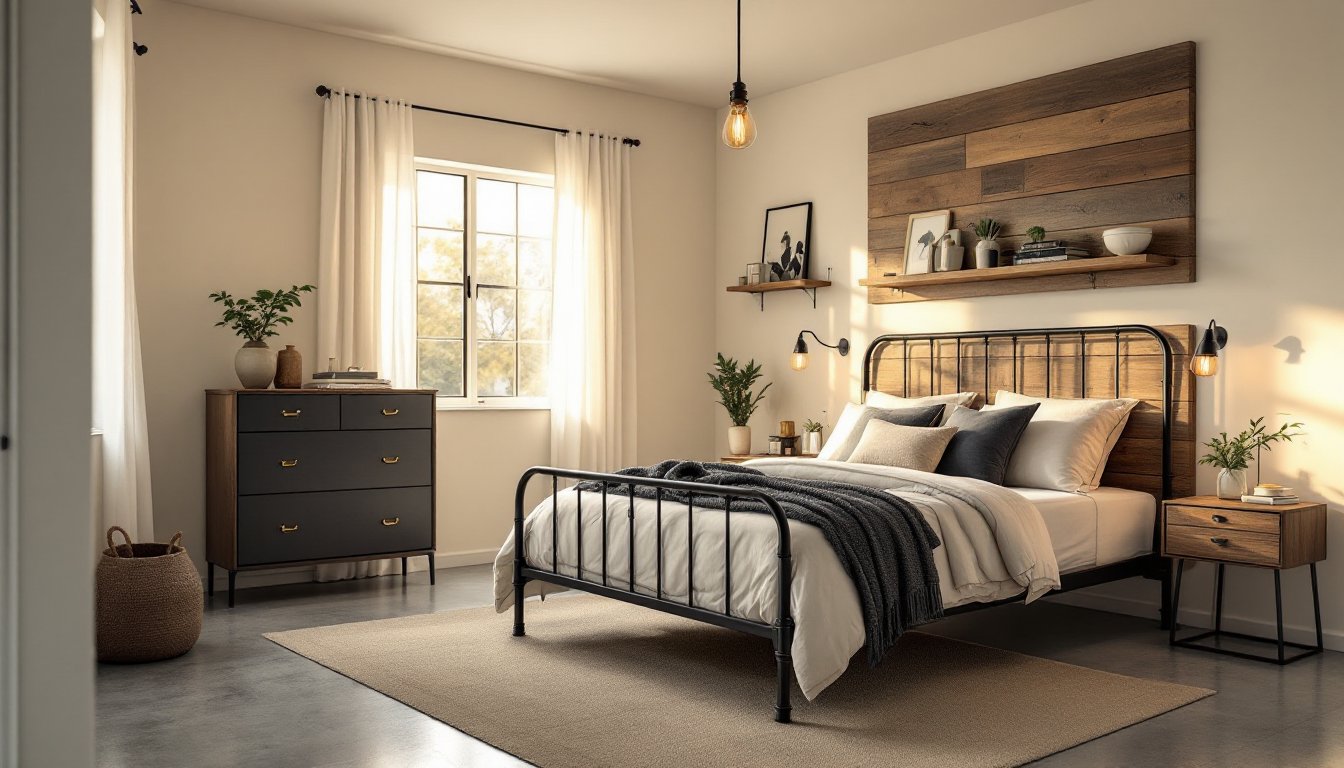
The backbone of modern rustic design is pairing industrial hardware and materials with organic wood finishes. Think exposed wooden beams paired with metal light fixtures, or reclaimed wood shelving supported by steel brackets. The contrast between rough textures and polished metals creates visual interest without feeling overdone.
Start with your bed frame. A wrought-iron or blackened steel frame anchors the room with industrial character, while a natural wood headboard adds warmth. If you’re not ready to replace the bed, exposed wooden accent walls behind the headboard achieve a similar effect. Look for nominal 2×10 or 2×12 reclaimed boards (actual dimensions are closer to 1.5″ × 9.25″ or 1.5″ × 11.25″) for authentic depth without overwhelming the space.
Nightstands should reflect this duality: a wood base with a metal top, or vice versa. Metal shelving units with wooden shelves or reclaimed wood floating shelves with industrial brackets add both function and design cohesion. Keep hardware finishes consistent, mixing blackened steel, oil-rubbed bronze, and chrome reads as chaotic rather than intentional.
Color Palettes That Balance Earthy and Contemporary Vibes
The color foundation of a modern rustic bedroom should feel grounded but not dated. Warm neutrals, cream, soft gray, taupe, and warm white, provide a clean backdrop, while deeper earth tones add richness. The key is restraint: choose two to three base colors and build from there.
Warm whites and creams work beautifully for walls, creating a calm backdrop without the sterile feeling of stark white. Pair them with deeper accents: charcoal gray, warm browns, or muted sage green. These deeper tones appear in textiles, accent walls, or cabinetry rather than large wall surfaces. Burnt orange, terracotta, and ochre work if used sparingly, think throw pillows or artwork rather than full walls.
Consider how natural light moves through your room. A north-facing bedroom benefits from warmer undertones, while south-facing rooms can handle cooler neutrals. Add visual depth by layering matte and warm metallic finishes rather than relying solely on color variation. Modern home design resources often showcase how restraint in the color palette actually draws more attention to texture and form.
Reclaimed and Vintage Furniture as Statement Pieces
Authentic reclaimed or vintage pieces tell a story in ways new furniture cannot. But mixing vintage and new requires intention. The goal isn’t a thrift-store aesthetic: it’s curated eclecticism that feels intentional.
Look for solid wood pieces, dressers, wardrobes, or side tables, with good bones. A vintage dresser with clean lines paired with modern knobs updates the look instantly. Avoid heavily ornate Victorian pieces unless your space leans specifically farmhouse. Mid-century modern furniture works exceptionally well in modern rustic schemes because its simple lines complement industrial elements.
Budget 20-30% of your furniture budget for reclaimed or vintage finds. Antique malls, local estate sales, and online marketplaces are goldmines, but inspect joints, drawer slides, and structural integrity before purchasing. A wobbly dresser isn’t charming: it’s unstable. When sourcing vintage pieces, check that solid wood construction is sound and finishes are either refinished cleanly or intentionally worn. <a href="https://mountain-view-motel.com/home-renovation-ideas-examples/”>Home renovation ideas often incorporate statement vintage pieces that anchor a room’s design narrative.
Lighting Fixtures That Set the Modern Rustic Mood
Lighting does heavy lifting in modern rustic design. It should be visible, part of the design rather than hidden away. Industrial fixtures (Edison bulbs in iron cages, pendant lights with metal shades) work, but pair them with softer ambient lighting to avoid a cold workshop feel.
Layer three types of lighting: overhead (a statement fixture or chandelier), task lighting (reading lights near the bed), and accent lighting (wall sconces or string lights behind floating shelves). A blackened steel pendant light or vintage-inspired chandelier serves as the room’s focal point. Position it centrally but ensure it’s dimmable: harsh overhead light erases the cozy feeling.
For bedside reading, swing-arm wall sconces with linen or paper shades soften industrial metals. Vintage Edison bulbs add warmth, though their low output means they work better as accent lighting. If you’re installing new fixtures, ensure electrical rough-in is complete before drywall repair. Most bedrooms require a ceiling outlet for overhead fixtures and wall outlets at 18 inches from the floor on each side of the bed per electrical code. Consider consulting a licensed electrician for any new hardwired fixtures.
Textiles and Layering for Comfort and Visual Interest
Textiles transform a room from visually interesting to genuinely comfortable. In modern rustic design, mix textures rather than matching sets: a linen duvet with a chunky knit throw, wool area rug with a cotton quilt, burlap pillows beside raw silk accent pillows.
Start with quality bedding in neutral tones, linen, cotton, or linen blends work best. Layer a knit or woven throw across the bed foot for texture. Add 3-4 pillows in varying textures: a euro sham, standard pillows, and smaller accent pillows in different fabrics. Area rugs matter significantly: a low-pile wool or wool-blend rug (6×9 feet or 8×10 feet) anchors the bed and softens the room acoustically. Jute or sisal rugs add natural texture but aren’t ideal under bare feet, use them as layering pieces under softer rugs.
Window treatments should feel organic but finished. Linen curtains in cream or warm white hang beautifully and filter light softly. Avoid heavy, ornate valances: instead, use simple rods in blackened steel or wood and let fabric be the focus. A wooden blind or matchstick shade adds layers without competing for visual attention. Farmhouse bedroom ideas demonstrate how textile layering creates depth without clutter.
Accent Walls and Wall Treatments
An accent wall anchors modern rustic design without overwhelming the space. Rather than bright color, consider texture: shiplap, reclaimed wood, or even patterned wallpaper in muted tones.
Shiplap, nominal 1×8 or 1×10 boards with tongue-and-groove joinery, creates immediate visual impact. If installing real shiplap, expect to invest in materials and labor or significant DIY time. Pre-primed shiplap panels exist but often read as plastic in person: genuine wood beats the alternative. If budget or rental restrictions apply, peel-and-stick shiplap wallpaper offers a no-damage option, though durability varies by brand.
Reclaimed wood accent walls deliver authentic character. Dimensions vary widely, but 1-inch-thick boards in random widths look intentional rather than salvaged from a construction site. Nail or screw them to studs (studs are spaced 16 inches on center in most homes), ensuring boards are acclimated to your room’s humidity for a week before installation to prevent cupping or warping.
Alternatively, textured wallpaper in warm neutrals, geometric patterns, or subtle stripes adds interest without the commitment of paint. Pattern should feel contemporary, avoid busy florals or anything screaming 2010s Pinterest. Choose flat or matte finishes over glossy for a more refined appearance. Before installing wallpaper or shiplap, patch wall imperfections, sand smooth, and apply primer if needed. Home design inspiration showcases how accent walls define a room’s character while maintaining a cohesive aesthetic.
Conclusion
Modern rustic design succeeds when every element feels intentional rather than accidental. Start with a foundation of warm neutrals and natural wood, layer in industrial touches through hardware and fixtures, and build comfort through textiles and thoughtful lighting. The beauty of this approach is flexibility, you can achieve it through small changes like new bedding and vintage nightstands or commit to larger projects like accent walls and refurbished furniture. Whatever your timeline and budget, these seven strategies provide a clear roadmap to a bedroom that feels both contemporary and warmly inviting.